Juan Pineda
Artist
Washington, D.C.
Washington, D.C. artist Juan Pineda brings Cubism, Mayan symbolism, and the energy of street art together in a bold, geometric design celebrating the cultures and identities that shape the District.
Instagram
Juan Pineda
Juan Pineda
Artist
Artist bio
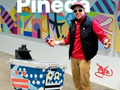
Juan Pineda, also known as CRI, is a Washington, D.C.-based visual artist and muralist whose work blends graffiti, contemporary street art, and cultural traditions. Born in Guatemala and raised in Maryland, Juan has been creating public artwork throughout the D.C. area since the mid-1990s.
His work spans murals, illustration, design, and the preservation of historic public art. Among his notable projects is the restoration of A People Without Murals Is a Demuralized People, a landmark 1977 Latino mural in Washington's Adams Morgan neighborhood. His work has also been recognized by The Washington Post, and he received a Proclamation Award from the City of Hyattsville for his mural In Memory of Freddy.
Through his work, Juan brings together cultural heritage, personal expression, and public space, using art to celebrate the communities and histories that shape the District.
The design
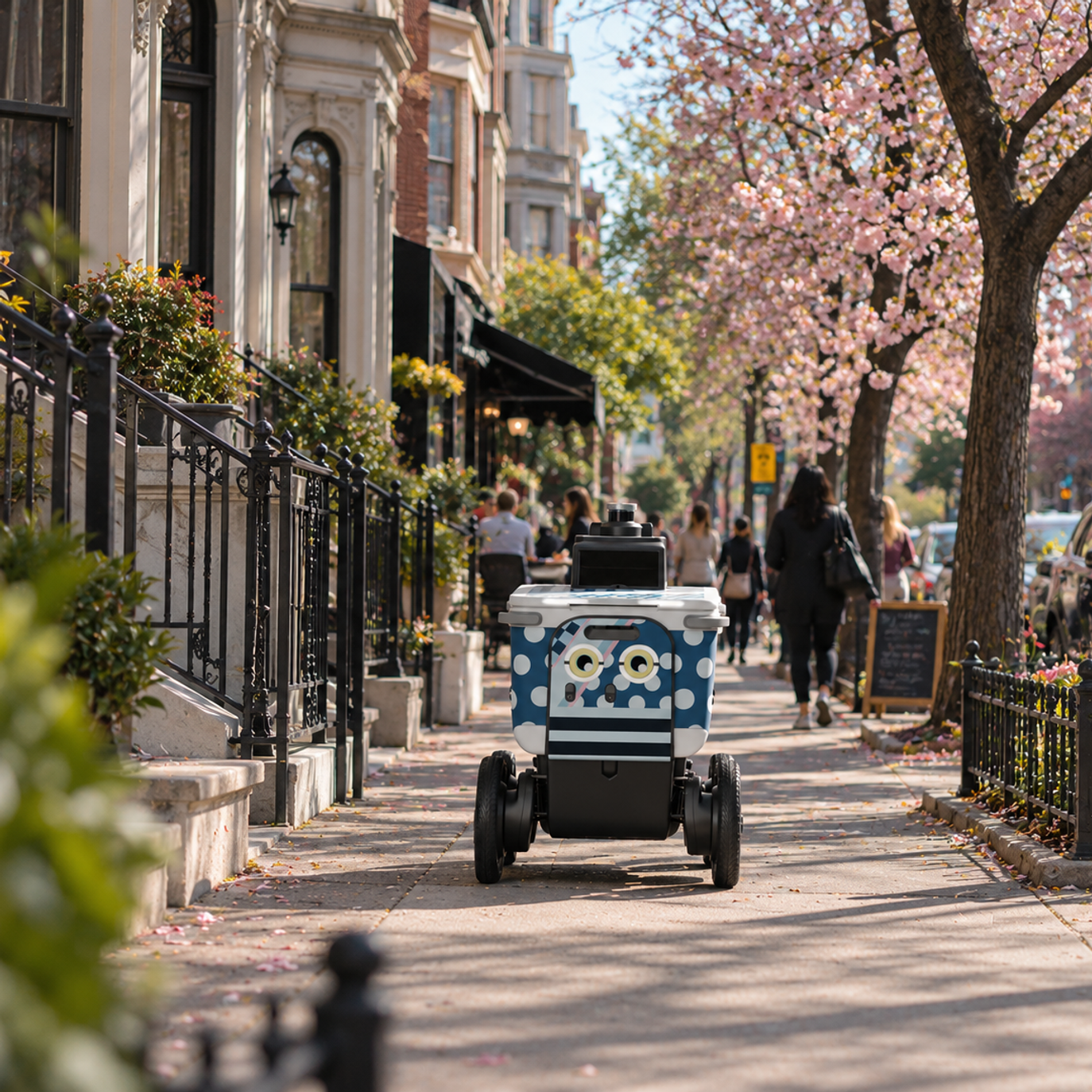
Juan's Moving Canvas design brings together influences from Cubism, Mayan hieroglyphics, and contemporary street art, combining bold geometry, expressive patterns, and unexpected colors.
Rather than drawing from a specific D.C. landmark, Juan looked to the cultures, identities, and creative energy that shape the District. The artwork reflects how different histories and perspectives can coexist within a shared community.
Designed to stand out on the sidewalk, the wrap gives our robot a confident, expressive personality while inviting people to discover new details with each encounter.
Design inspiration: Cubism, Mayan symbolism, graffiti, geometric patterns, Latino heritage, and Washington, D.C.'s street art culture.
Q&A with Juan Pineda
- What inspired your design? My design is a visual conversation between cultures, movements, and emotions. I drew inspiration from the bold geometry of Cubism, the symbolism of Mayan hieroglyphics, the raw energy of street art, and the rhythm found in geometric patterns. I wanted these influences to come together in a way that feels rooted in history yet alive in the present.
- What excites you most about bringing your design to the community by way of Serve? What excites me most is the opportunity to turn art into a shared experience. Collaborating with Serve allows me to bring my perspective into a public space while representing the District's vibrant art community as a Latino artist. It is meaningful to create something that reflects where I come from while becoming part of the surrounding community.
- How do you see the robot fitting into the community visually? I imagine the robot becoming a welcoming, approachable presence within the community. Its smooth, rounded edges soften its futuristic character, moving away from a heavy, industrial appearance. Visually, I want it to feel contemporary, accessible, and full of personality.
- Are you aiming for the robot to blend in, stand out, or spark conversation? I want the robot to stand out and spark curiosity. Through bold lines, expressive patterns, an unexpected color palette, and a creative composition, the design embraces authenticity rather than trying to disappear into its surroundings. I hope people pause, look twice, and see something different with each encounter.
- Did you draw on any local culture, landmarks, or traditions in your design? Yes. I drew inspiration from cultural identity, emotion, and the visual language of street art. Rather than focusing on a single landmark, I wanted the design to reflect the living culture of the community, the way identity, creativity, and personal expression can transform public spaces.
- How do you want people to feel when they encounter the robot? I want the robot to evoke an emotional reaction. The colors, symbols, and patterns are meant to communicate energy and identity. I hope people feel a connection to culture and creativity while appreciating the intersection of modernism and pop art. Above all, I want it to feel like an invitation to engage.
- What story or message does your design tell about the community? The design tells a story about connection, between people, cultures, emotions, and ideas. It uses visual language to show that a community can hold many identities while sharing a unified space. I hope the robot inspires people to see beauty, emotion, and possibility in the environments they inhabit.
- How would you describe the personality your design gives the robot? I see the robot as sleek, futuristic, and confident, yet approachable and expressive. Its design balances technology with human emotion. I wanted to give the robot an inviting personality, a futuristic character with a human soul.