Why Immigrants Make Great Entrepreneurs
Why Immigrants Make Great Entrepreneurs
Article
Why Immigrants Make Great Entrepreneurs
by Ali Kashani, Co-founder and CEO
On January 27, 2017, I got the news that my U.S. work visa had been approved.
A Canadian living in Vancouver, I was at loose ends after I'd been pushed out of the company I founded there. It was my first startup, and I'd put my entire savings into it. I was broke. Just then, a highly respected Silicon Valley venture firm, Pear VC, invited me to join as an Entrepreneur in Residence. This was beyond a dream for an aspiring entrepreneur, to join a legendary firm with an office on University Avenue near Stanford University, the ground zero of Silicon Valley. This was where Steve Jobs once paced and the future of tech was negotiated over coffee. I leaped at the chance.
But January 27 was also the day that the first "Muslim ban" was signed — a moratorium on immigrants from seven predominantly Muslim countries, including Iran, where I was born.
Knowing that within hours my Iranian origin could ban me from entering the U.S., despite my Canadian passport, I quickly grabbed a few things and threw them into my car, texted my family goodbye, and headed for the border. I hadn’t even received the visa documents. But there was no time to waste; I had to try my luck.
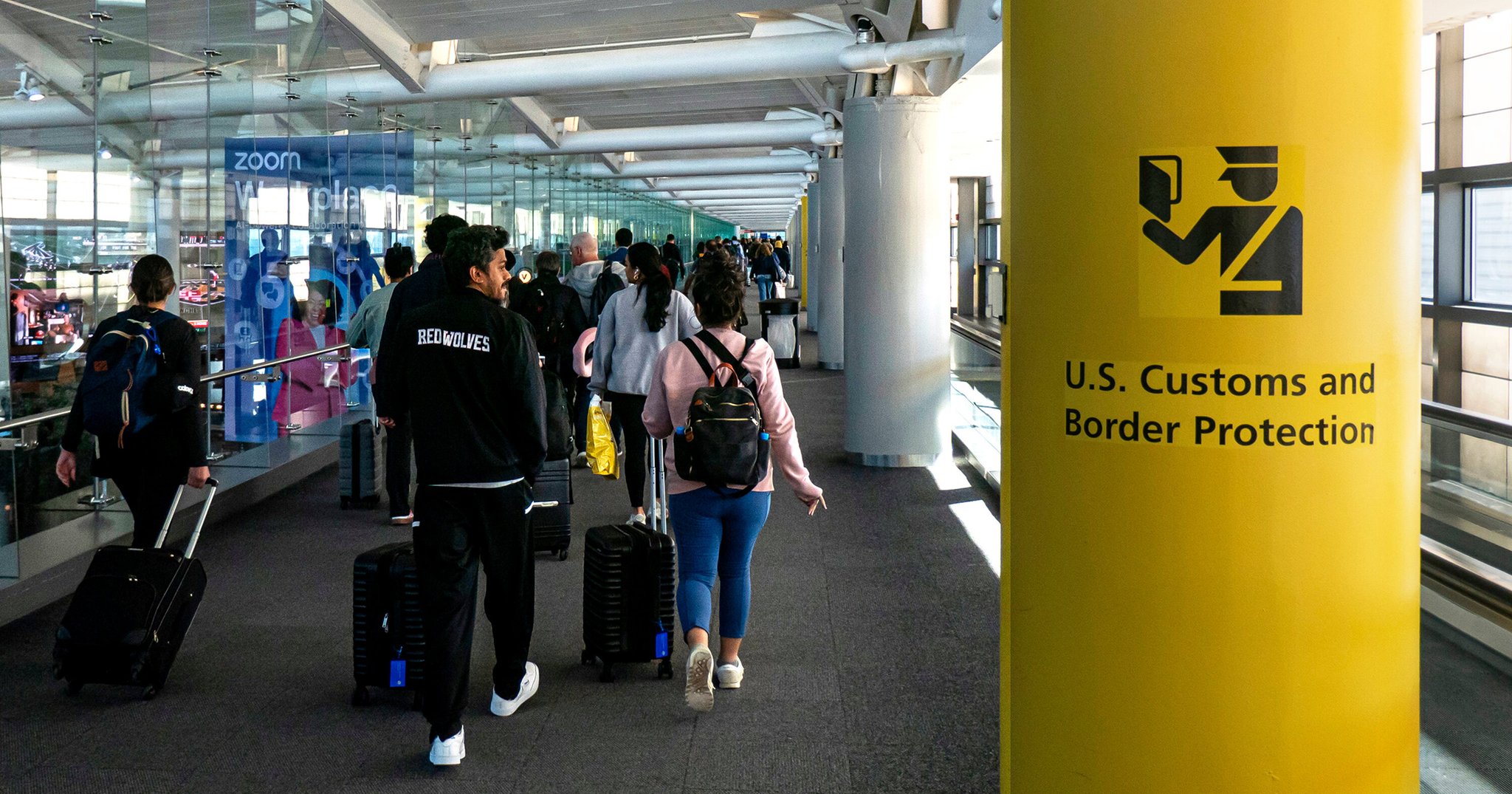
I was waiting in the lineup at the border checkpoint, with just three cars in front of me, when I received a text message with the news: "It’s signed." The border ban was in effect.

The border guard grilled me about my qualifications and asked how I could have received such a job opportunity. It seemed clear that he did not intend to permit entry. My dream of becoming a Silicon Valley entrepreneur was about to be crushed.
But then his supervisor intervened and approved my entry to the U.S. I had a valid visa, after all. I was free to enter the country.
I drove all the way to California the same day. Sixteen hours later, I arrived in the Bay Area, late at night, ready to get to work.
A year after I crossed the border into the U.S., the small startup that I incubated within Pear VC was acquired by Postmates. I became the VP in charge of the company's research initiative, including robotic last mile delivery. Three and a half years later, we joined Uber through an acquisition, and shortly after, I spun out my team into Serve Robotics, a standalone company. In 2024, we took Serve public on the NASDAQ, and soon after, we reached a valuation of $1 billion and deployed one of the largest autonomous fleets across the country.
Two exits, one spin-off, and the pinnacle of entrepreneurial dreams, an IPO, all a direct result of one border agent’s decision a mere seven years earlier.
Immigrants are natural company builders
My story is just one small drop in the torrent of immigrant entrepreneurship narratives.
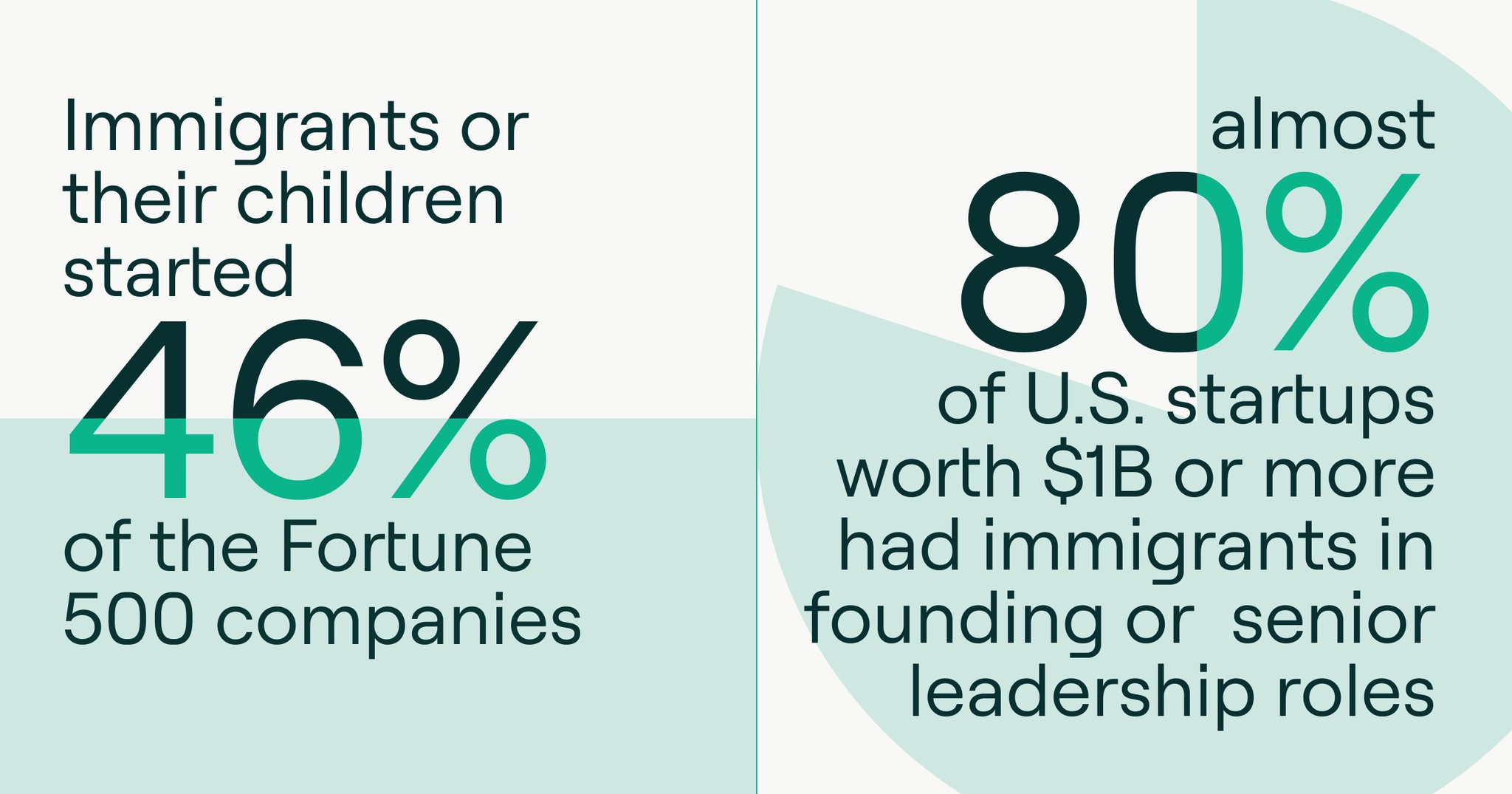
The statistics are astounding: Immigrants or their children started 46% of the Fortune 500 companies, according to the American Immigration Council. These companies generated a combined $8.6 trillion in revenue in 2024.
Of the 14 companies making their first appearance on the Fortune 500 in 2025, ten (71%) were built by immigrant founders or their children.
In 2025, almost 80% of U.S. startups worth $1B or more had immigrants in founding or senior leadership roles, according to the National Foundation for American Policy.
As a population, immigrants create 42% more jobs per person than native-born citizens, according to the National Bureau of Economic Research.
These figures are especially impressive considering immigrants are only 15% of the population and 20% of the workforce.
But it’s not coincidental.
Welcome to ‘uncertainty boot camp’
The heart of the immigrant experience is navigating uncertainty, and startups are forged in that same fire.
Uncertainty is more than just risk. A risk is a known unknown. You know there’s a chance your visa application might get denied or that your product launch might get delayed due to supply chain shortages.
Uncertainties are “unknown unknowns” — things that come out of nowhere, that you had never anticipated, and that could derail your project if you aren’t able to adapt, like a war breaking out, an unprecedented border ban, or a global pandemic shutting everything down. It’s by embracing and overcoming uncertainty that startups reduce entropy and create value. But it takes a certain kind of person to lean into the unknown like this.
Immigrants deal with uncertainty in every stage of their journeys. Ask any immigrant, and they will have similar stories for days: Unexpected barriers. Financial crises. Illnesses. Political or economic instability. Regime changes. War.
That ability to deal with uncertainty is what makes so many immigrants great entrepreneurs. Emigrating to a new country is a better training ground for entrepreneurship than attending an Ivy League university or a startup boot camp. (Although if you get a chance to do all of those things, go for it!) As an immigrant, you learn to live with an enormous amount of uncertainty. As a startup founder, you have to do the same.
It’s also likely that there’s some self-selection: People who are prepared to deal with uncertainty and are driven to succeed are more likely to leave everything they know behind, say goodbye to their families and home countries, and venture into the vast uncertainty of a new world wholly unfamiliar to them.
Whether it’s experience, natural predisposition, or some combination of the two, many immigrants’ eyes and ears are more open to opportunity in whatever form it arrives. That pays off, for them and for their new countries.
Take Hamdi Ulukaya, for example. This Turkish-born entrepreneur emigrated to the US in the 1990s to study English. The upstate New York area where he lived reminded him of the countryside in Eastern Turkey. That inspired him to start a small yogurt company. With a loan, he bought an old yogurt factory in 2005. In the early days he even slept in the factory. In 2007, Chobani sold its first yogurt, and five years later, it was a billion-dollar company. Chobani is now valued at about $20 billion and employs 3,000 people.
To foster entrepreneurship, encourage immigration
Countries that want competitive advantage in the global economy create opportunities for immigrants. Ulukaya first came to the US on a student visa. But after being here for a few years, he spotted an opportunity. Rather than shut him down, the country supported his aspirations. And now we all benefit from his success, because Ulukaya has created good-paying U.S. jobs and a new market for U.S. dairy products.
The recent efforts to restrict visas and limit the countries from which we’ll accept immigrants is doing this country a disservice, particularly in a moment when a global race towards AI domination is fueled by talented immigrants. Case in point: Iran is one of the largest sources of international graduate students in STEM, with over 10,000 scholars currently studying in the US. Since December 2, 2025, however, their legal status is in doubt, due to a pair of memoranda shutting down USCIS benefit applications from Iranian nationals, among others. With war and disruption in Iran and their immigration status uncertain in the US, these students are in limbo.
Similarly, many H1B holders from India and other countries are here in the US, filling essential tech roles, even as the H1B visa program is subject to new, severe restrictions. Visa restrictions like these will undoubtedly encourage more students and tech workers to choose other countries in the future, harming US entrepreneurial competitiveness.
What’s more, if a more restrictive tariff policy is meant to reduce our dependence on imports, that needs to be balanced by support for the growth of more robust U.S. industries; something that requires more talented engineers, scientists and entrepreneurs, not less.
Cutting off the supply of our most productive class of entrepreneurs is shortsighted, and will hurt this country’s ability to produce new startups, new Fortune 500 companies, and new jobs.
Creating American jobs
Serve’s story is still in its early stages, but our growth is accelerating. As of early 2026, we employ over 400 people, operate a fleet of 2,000+ robots serving 20 U.S. cities from Los Angeles, to Miami, Atlanta, and Chicago, and deliver meals from 4,500+ restaurants to an area covering 3.75 million people.
I'm proud of the success our team has achieved and prouder still of the contributions that our company is making to society. We are helping thousands of local businesses and their employees thrive in a world where four out of five restaurant meals are consumed at home.
I don't believe I could have achieved successes like these without the experiences I've had as an immigrant. And I am proud to be contributing to the success of an American company, building American robots right here in Silicon Valley.
And my experience is not unique. Those Iranian students and scholars in the United States facing uncertainty today, Dreamers who have grown up and built their lives here, and Indian H-1B workers unsure about their future are studying, building, and contributing to this country while navigating an unclear path forward. I call on the U.S. government to strengthen and expand the International Entrepreneur Rule and to modernize our visa system so that the people already helping to build America’s future have a clear and reliable path to stay.
This essay was originally published on Substack. You can read and subscribe here.