The Americans With Disabilities Act (ADA) Is For Everyone
The Americans With Disabilities Act (ADA) Is For Everyone
Article
By Michele Lee, Senior Manager of Public Policy and Accessibility, Serve Robotics
In 2003, just over a decade after the Americans with Disabilities Act (ADA) was signed into law, I was in a car crash that changed my life overnight. One day I was someone who never had to think about accessibility. The next, I was someone who depended on it.
Before my accident, like most Americans, I hadn’t thought much about the ADA. I didn’t know about the protections it afforded people with disabilities, and I certainly hadn’t thought about how many rights the disability community still lacked.
Once my daily life depended on those safeguards, the gaps became impossible to ignore. Helping to close them became a motivating force.
People-First Cities are Accessible Cities
This summer marked the ADA’s 36th anniversary, and I’ve been reminded of how much good has come as a result of that historic law.
Thanks to the ADA, one in four of us, or over 70 million people who live with a disability, have civil rights protections against discrimination in employment. Businesses and schools have to provide accessible accommodations like curb cuts and ramps. Technology and TV programs now offer captioning and accessible websites.
But cities across the country are still falling short of realizing the ADA’s full potential. According to the National League of Cities, 65% of curb ramps and 48% of sidewalks across the country aren’t fully accessible to people with mobility challenges.
Inaccessible infrastructure is only part of the challenge; too many people see the ADA as a narrow initiative that protects only a certain group of people.
My life is just one proof point that every person at some point in their lives will rely on the ADA. That’s because anyone, including a friend or a loved one, can become disabled from an accident, an illness, or simply from getting older. To put it another way, we’re all temporarily able-bodied.
My wheelchair changed not only how I move through the world, but also how I experience the streets and sidewalks around me. After years of broken sidewalks and missing curb cuts, I am now an advocate for accessible urban infrastructure designed with people, not just cars, in mind.
When cities are built for cars first, it’s people with disabilities who get left behind. Streets designed for car traffic mean narrower sidewalks or no sidewalks at all, which make neighborhoods impossible to navigate.
When we design sidewalks for accessibility, the resulting space accommodates everyone and is wide enough so that a person walking and a wheelchair user can easily pass. That’s how cities can become more usable, more vibrant, and more welcoming for everyone.
The curb cut effect is one of my favorite examples of this idea in action. The term traces back to the early 1970s, when a group of disability activists in Berkeley, California poured cement on a curb to create their own permanent ramp. Their act of defiance and advocacy pushed the city to install its first official curb cut in 1972.
Other cities followed suit, and hundreds of thousands of curb cuts were installed across the country. Researchers later found that at one shopping mall, roughly nine out of ten “unencumbered pedestrians,” or pedestrians without mobility challenges, were choosing to walk on a curb cut.
Now I see this pattern everywhere: Sidewalk ramps built for wheelchair users end up helping so many people in a single community, from parents pushing strollers, to travelers pulling luggage, to delivery robots like ours at Serve rolling to their next drop-off.
When urban design centers the needs of disabled people, we all win.
Behind the Scenes at Serve + Showing Up for Disability Advocates
I feel lucky to work at a company that’s pioneering new ways to use technology to improve urban design and make cities more accessible for the people who live in them.
As part of my job at Serve, I help develop and test new accessibility features on our robots, like more sounds and lights, so the technology itself works better for everyone. I also dig into the data our robots collect to help map challenges with infrastructure, like broken curb cuts or a missing ramp. That’s information we can use to advocate for improvements.
Partnering with the communities we serve is another part of the work I love. We want to hear from people working and living in our cities and learn how our company and our technology can help improve their daily lives.
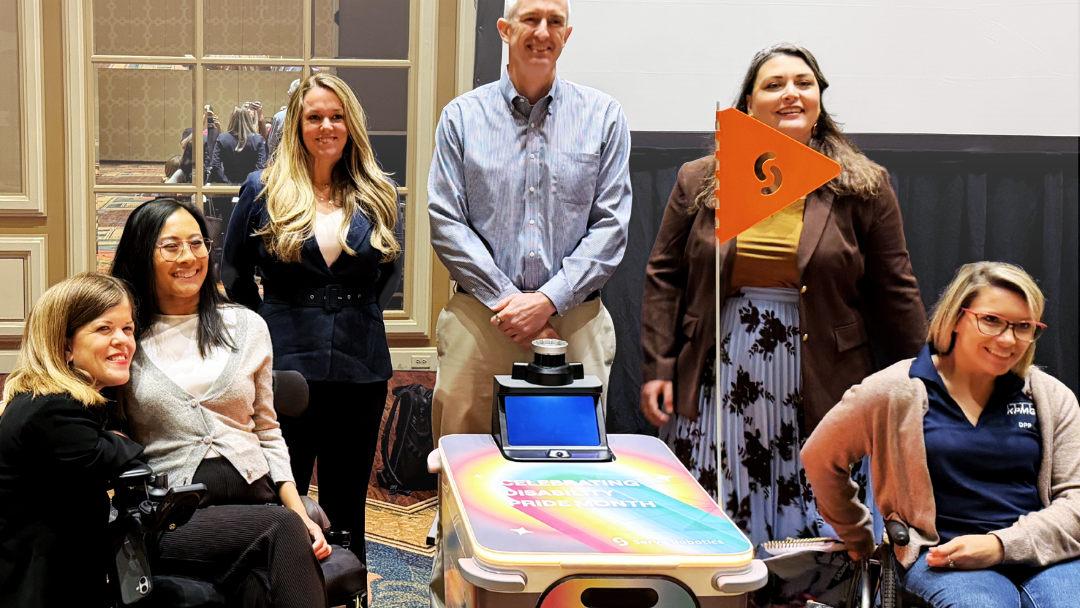
Being able to engage directly with disability advocates and experts has been especially rewarding. That most recently looked like Serve’s engagement at several Disability Pride Month events this summer, all of which were great examples of our community showing up for and celebrating each other.
In Los Angeles, Serve sponsored Making Space’s second annual Disability Pride Month gathering, which brought together disabled professionals, creators, allies, and disability-inclusive employers and organizations. Through our partnership with Making Space, we also launched a Disability Pride Month Artist Competition, where we got to spotlight disabled artists and have the winner win $1,500 to display their work on Serve’s robots as a part of our Moving Canvas program. It’s a direct (and creative!) way for our community to literally leave their mark on the streets around them.
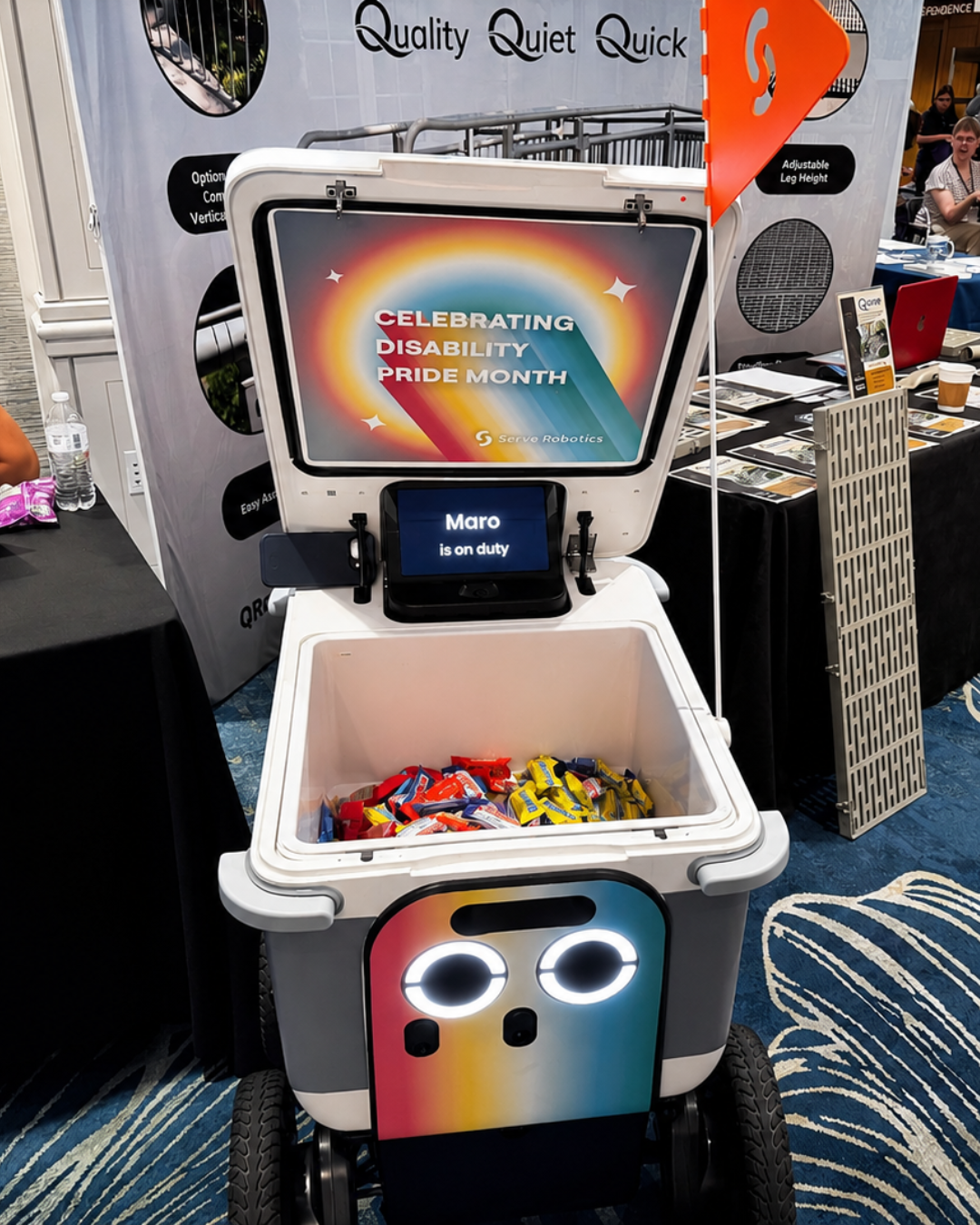
In DC, we sponsored the National Council on Independent Living’s annual conference, which supports our country’s independent living centers. Supporting NCIL is important because these centers serve people with disabilities facing barriers to independent living. That includes transportation barriers, which make everyday errands like grocery runs or picking up prescriptions much harder, and turn reliable delivery into more of a necessity than a convenience. Making deliveries more accessible and affordable for people with disabilities is exactly the kind of problem I want to keep solving here at Serve.
There’s still work to do until we realize the most accessible, people-first versions of our cities that the ADA helped us envision. But until then, we have to treat accessibility as the floor we start from instead of the ceiling we’re reaching for.
That’s what we are working toward at Serve. I’m proud to be a part of the journey.