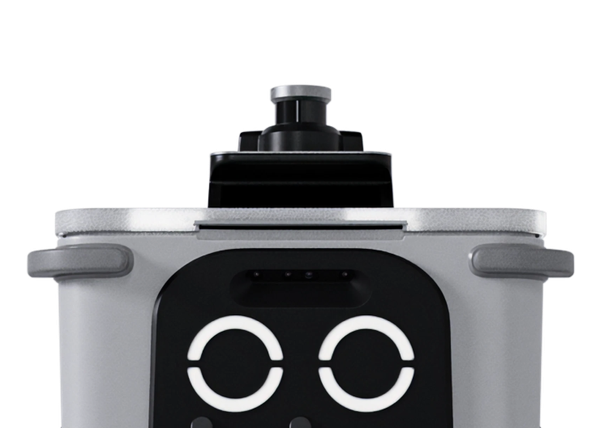
Accessibility
Our commitments to accessibility
Accessibility and Safety guide how our robots move, how we respond when something goes wrong, and how we show up in the communities where we operate.

Shared sidewalks, shared responsibility
While ADA compliance is table stakes, we strive to go beyond basic legal requirements — our goal is to co-design with the disability community to help keep public space a welcoming right of way. Our robots use advanced sensors and artificial intelligence to navigate in public spaces safely and reliably. They are designed to yield the right of way to others, including people who use mobility aids.
Accessible design has been part of our story since the very first prototype. Our goal is to be a responsible neighbor, listen when something is not working, and keep improving over time.
Our Accessibility and Safety commitments
We hold ourselves to clear commitments that guide how we operate.
Accessibility
- Yielding the right of way: When space is tight, our robot is designed to slow down, yield the right of way, or find another safe route.
- Community co-design: We work with regulators, community leaders, seniors and disability advocates to seek ongoing feedback on robot behavior, public space use, and product accessibility.
Making sidewalks better for everyone: We use our information about blocked areas, narrow stretches, and curb-cut data, to help cities make sidewalks safer and more accessible.
Safety and accountability
- Clear data practices: Our robots only collect the data they need to get around safely, and we keep that information protected with strong security measures. Personal details are limited to delivery needs or direct interactions with us, and we never use delivery information for marketing.
- Human supervision: Robots navigate primarily on their own, with trained remote operators available to step in when needed for safety.
- Incident response process: When concerns are raised, we track them and follow a defined process to review what happened and decide on next steps.
Working with communities
We depend on strong relationships with cities, community groups, and local partners. We collaborate with regulators, community leaders, disability advocates and seniors on how robots use shared space, and we work with local partners so our robots provide real benefits and fit naturally into the neighborhoods they are part of.
How Serve robots navigate around people
Serve robots move at walking speed and follow the rules of the areas where they operate. They use advanced sensors and artificial intelligence to understand their surroundings. Consistent with our commitment to yielding the right of way, our robots slow down around people, reroute whenever possible on congested or blocked sidewalks, and favor clear, wide paths.
Robots navigate primarily on their own, while trained remote operators monitor the fleet and can step in when a situation needs help. Whether a robot is moving autonomously or with operator support, it is expected to follow the same safety standards, including yielding to people on the sidewalk.
Safety by design
Safety is built into our system at three levels.
- 01Hardware and sensing: Robots have hardware such as cameras, lidar, and other sensors that help them understand their surroundings and detect obstacles.
- 02Autonomy and rules: Our autonomy software uses sensor data to plan routes, follow local rules, and react to what is happening in real time, including maintaining safe distance from pedestrians, enforcing low speeds and favoring safe, accessible paths.
- 03Human oversight and field support: Trained remote operators continuously monitor the robots and will intervene when needed. Engineering controls and procedures include collision avoidance system, fail-safe brakes and monitoring for unexpected motion to help prevent unsafe movement.
Together, these layers give us more than one way to keep people safe and to improve over time.
Accessibility features
Our robots include specific accessibility features that were developed and refined with input from people with disabilities and community partners:
- Audible cues and localization: Robots emit sounds designed to help people who are blind or have low vision localize and track a robot’s position; these sounds were developed with input from the blind community.
- Visual motion cues: Lights and motion patterns help sighted pedestrians understand a robot’s direction of travel.
- On-robot information: Raised lettering and braille include a customer service number; staffed support is available during operating hours in multiple languages.
- Respect for mobility devices and routes: The robot recognizes wheelchairs, strollers, and people who use mobility aids and will yield or pull off the sidewalk rather than requiring anyone to move. We use our information about blocked areas, narrow stretches, and curb-cut data, to help cities make sidewalks safer and more accessible.
Serve robots also boast a range of market-leading safety capabilities, including automatic emergency braking, fail-safe mechanical braking, and vehicle collision avoidance.
Learning and improving
When an issue is raised, our team reviews all of the information we have to understand what happened and how to respond. That may include internal logs, available sensor or video data from the robot, and accounts from the people involved, all handled in line with applicable laws and our privacy commitments. In all cases, our goal is to act as a responsible neighbor in the communities where we operate.
If something does not feel safe or accessible, please email us at contactserve@serverobotics.com.